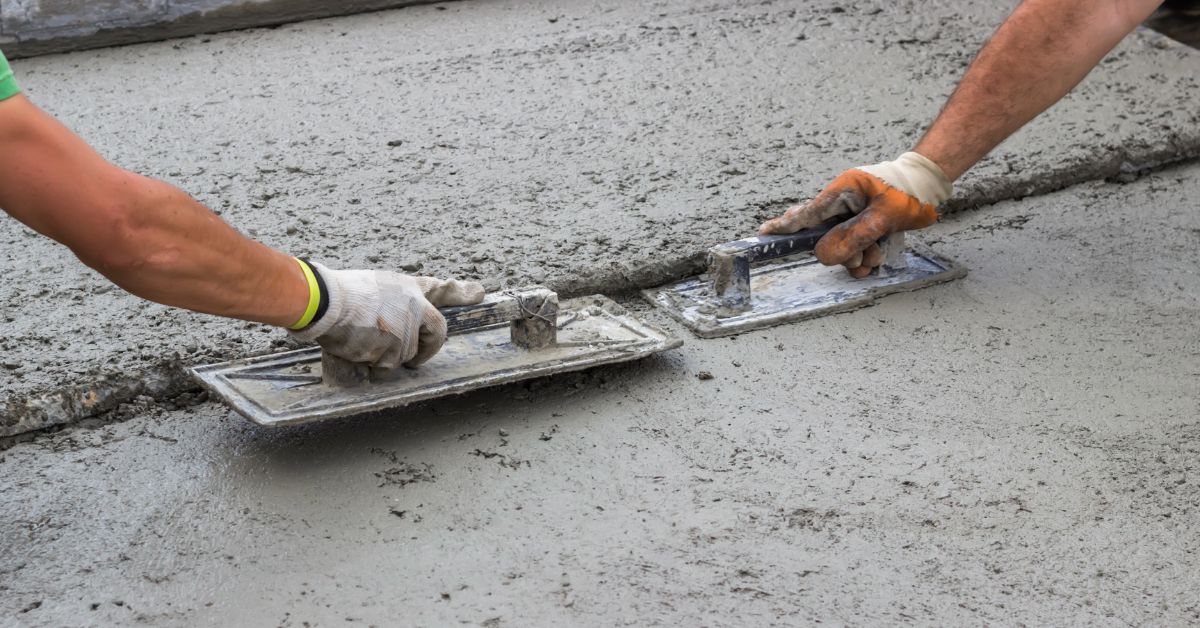
The Cost To Pour Concrete Slab ranges between $4 to $14 per square foot, depending on some key factors like slab thickness, concrete type, area size, and design features. However, the national average costs $6 to $8.50 per square foot.
With these calculations, we can say that the cost to pour a 30×30 slab may cost between $3,600 to $12,600. Today, we’ll briefly discuss what is the cost to pour concrete slab, what factors impact its price, and some key tips to save when pouring concrete slab. Moreover, we’ll also share a concrete calculator with you to accurately measure prices. So, let’s get started.
Cost To Pour Concrete Slab In 2025
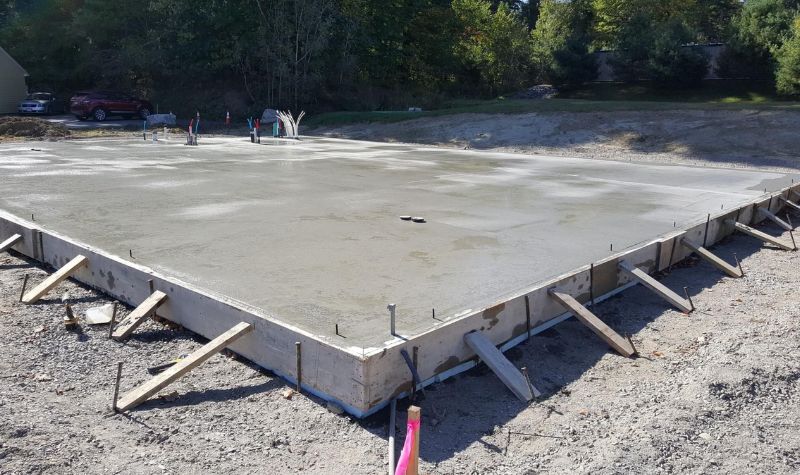
A concrete slab is made by mixing cement, gravel, and other materials, then pouring it into a gravel base. After it dries, the frame is taken out, and you’re left with a solid slab. It is flexible and offers a durability of over 50 years with proper maintenance.
However, pouring a concrete slab can be costly because the price varies due to several factors and decorative finishes, which we’ll discuss below. The materials alone cost around $3 to $8 per square foot, while labor costs between $2 and $6 per square foot. So, it’s better to understand the costs upfront, whether you’re thinking about a garage floor, home foundation, shed, or patio during your house building.
Concrete Calculator
To determine the exact amount of materials needed, you can use our concrete calculator online. To calculate slab volume, select the concrete slab calculator and enter the dimensions. The concrete footing calculator will give you footing volume and weight, while the concrete column calculator will give details about columns.
Concrete Calculator
1. Cost To Pour Concrete Slab By Size
The average cost of a concrete slab is $3 to $14 per square foot, depending on concrete thickness, type, and area accessibility. However, a large slab of size 30×30 may cost between $2,700 and $12,600, compared to a smaller slab size of 8×8. In simple words, a bigger slabs cost more than a smaller slab.
| Slab Size (Square Feet) | Average Cost Installed ($3 - $14/SF) |
|---|---|
| 64 (8x8) | $192 - $896 |
| 144 (12x12) | $432 - $2,016 |
| 400 (20x20) | $1,200 - $5,600 |
| 576 (24x24) | $1,728 - $8,064 |
| 900 (30x30) | $2,700 - $12,600 |
| 1,600 (40x40) | $4,800 - $22,400 |
| 3,200 (40x80) | $9,600 - $44,800 |
2. Cost To Pour Concrete Slab By Project
The cost of a concrete slab varies depending on the project and its complexity. These slabs are used in various projects like landscaping, shed foundations, and garage flooring. Concrete or asphalt driveways are now in trend. You can also choose concrete for your patio when building inground pool. Each project type requires different concrete sizes, thickness, and reinforcements.
| Project Type | Typical Size | Cost Range ($3-$14/sq ft) |
|---|---|---|
| Commercial Slab | 40x60 (2,400 sq ft) | $7,200 - $33,600 |
| Driveway | 24x24 (576 sq ft) | $1,728 - $8,064 |
| Garage Floor | 20x20 (400 sq ft) | $1,200 - $5,600 |
| House Foundation | 30x40 (1,200 sq ft) | $3,600 - $16,800 |
| Patio Slab | 12x12 (144 sq ft) | $432 - $2,016 |
| Pool Deck | 20x30 (600 sq ft) | $1,800 - $8,400 |
| Retaining Wall Footing | 1x20 (20 sq ft) | $60 - $280 |
| Shed Base | 10x12 (120 sq ft) | $360 - $1,680 |
| Sidewalk | 4x50 (200 sq ft) | $600 - $2,800 |
3. Cost To Pour Concrete Slab By Concrete Thickness
Concrete slabs cost vary due to differences in their thickness. Thicker concrete slabs require more materials and labor but provide more stability. For example, a 4″ concrete slab, which is often used for walkways and patios, may cost you between $3.50 and $6.50 per square foot, with a total installation cost of around $1,400 to $2,600.
| Thickness | Typical Use | Cost per sq ft | 400 sq ft Project |
|---|---|---|---|
| 4" | Patios, Walkways | $3.50 - $6.50 | $1,400 - $2,600 |
| 5" | Residential Driveways | $4.25 - $7.50 | $1,700 - $3,000 |
| 6" | Garage Floors, RV Pads | $5.00 - $8.50 | $2,000 - $3,400 |
| 8" | Heavy-Duty Driveways | $6.50 - $10.00 | $2,600 - $4,000 |
| 10" | Commercial Slabs | $8.00 - $12.00 | $3,200 - $4,800 |
| 12" | Foundations, Structural | $10.00 - $14.00 | $4,000 - $5,600 |
4. Cost To Pour Concrete Slab By Reinforcement
Reinforcement helps stop cracks, makes the slab stronger, and spreads the weight evenly. You may choose from options like wire mesh, rebar, steel fiber, and welded wire fabrics, resulting increase in cost to pour a concrete slab.
| Reinforcement Type | Total Installation Cost/SF | Notes |
|---|---|---|
| Wire Mesh (6x6 W1.4/W2.9) | $0.40 - $0.85 | Cost-effective for small to medium projects; easy to install but limited strength for heavy loads. |
| Rebar (#3 or #4 Bars) | $1.25 - $2.50 | High strength, ideal for structural applications; requires skilled labor for placement. |
| Fiber Reinforcement | $0.20 - $0.60 | Integrated into concrete mix; reduces cracking but not suitable for heavy structural loads. |
| Post-Tension Cables | $4.00 - $7.50 | High cost, used for large spans; requires specialized equipment and expertise. |
| Welded Wire Fabric (WWF) | $0.70 - $1.70 | Versatile for flatwork; balances cost and strength, easier to handle than rebar. |
| Rebar + Mesh Combination | $1.65 - $3.35 | Enhanced strength for demanding applications; higher labor due to complex installation. |
| Steel Fibers (Industrial Grade) | $1.00 - $2.50 | Mixed into concrete; improves durability, suitable for industrial floors. |
5. Cost To Pour Concrete Slab By Finish Type
Consider choosing a finish type from some popular options like stamped, exposed, or color to enhance the appearance and value of your property. You can skip it, too, to save money. Otherwise, it may cost you an extra $3.50 and $15 per square foot.
| Finish Type | Total Installation Cost/SF | Notes |
|---|---|---|
| Broom Finish | $4.00 - $8.00 | Cost-effective, non-slip surface; ideal for driveways and walkways. |
| Exposed Aggregate | $7.00 - $12.00 | Textured, durable finish; involves washing to expose stones, labor-intensive. |
| Polished Concrete | $6.00 - $12.00 | Sleek, reflective finish; requires grinding and sealing, ideal for modern interiors. |
| Salt Finish | $5.00 - $9.00 | Textured, slip-resistant; rock salt application, cost-effective for outdoor areas. |
| Stained Concrete | $5.00 - $10.00 | Adds color, customizable; cost varies with stain type and application complexity. |
| Stamped Concrete | $8.00 - $15.00 | Decorative, mimics stone or brick; higher cost due to patterns and labor. |
| Trowel Finish | $3.50 - $7.00 | Smooth surface, suitable for indoor floors; requires skilled labor for even finish. |
Factors Impacting Cost To Pour Concrete Slab
Besides factors like slab size, concrete thickness, reinforcement, finish type, and your project type, many other factors decide the overall cost of concrete slab pouring.
| Cost Factor | Total Cost Impact/SF | Notes |
|---|---|---|
| Accessibility | $0.50 - $2.00 | Difficult site access (e.g., steep slopes, tight spaces) may require pump trucks ($900 flat fee) or extra labor, adding 15-30% to costs. |
| Concrete Slab Type | $4.00 - $18.00 | Pre-cast slabs ($5-$30/SF) are pricier but reduce labor; monolithic slabs ($4.50-$14/SF) are cost-effective for single pours. |
| Labor | $2.50 - $5.00 | Includes formwork, pouring, and finishing; averages $45-$50/hour. Complex sites increase labor costs. DIY can save $2-$3/SF. |
| Land Preparation | $0.60 - $2.00 | Involves excavation, compacting, and vapor barriers; costs rise for uneven terrain or obstacle removal. |
| Location | $0.50 - $3.00 | Urban areas add 10-20% due to higher labor/material costs; rural areas may incur delivery fees. |
| Pad Base | $1.00 - $3.00 | Gravel or sand base (4-6 inches) ensures stability; costs $10-$50/ton. Critical for drainage. |
| Radiant Heat | $11.00 - $25.00 | PEX tubing for in-slab heating adds significant cost; best for cold climates, requires skilled installation. |
1. Accessibility
Areas that are hard to reach, like basements, crawl or tight spaces, or areas requiring special equipment may cost you between 15 and 30% due to the increased complexity and time.
2. Concrete Slab Type
The type of concrete used for a project also significantly impacts the overall cost. Pre-cast slabs are costly compared to monolithic slabs as they’re higher-quality options offering higher strength and performance.
3. Labor
Labor costs for concrete slab installation typically range between $2 and $6 per square foot. Some also charge $45 to $50 per hour, depending on tasks like material placement, concrete form creation, and setting.
4. Land Preparation
Before pouring concrete, make sure that your land is leveled and there are no hills, bumps, or debris. Otherwise, you might need to hire a professional for these tasks, which may cost you $0.60 to $2.00 per square foot. Its price also depends on the accessibility of the work area.
5. Location
Your geometric location directly impacts the cost of pouring concrete. Rural areas will incur higher delivery costs for 10-yard concrete truck, while urban areas may incur an additional 10 to 20% due to higher labor and material costs.
6. Pad Base
When looking for how much does it cost to pour concrete slab, make sure to count the pad base cost. It reduces cracking, prevents shifting, and improves drainage. A 4 to 6 inches of sand or gravel base may cost you $1.00 to $3.00 per square foot.
7. Radiant Heat
Consider radiant floor heating for home fixing and insulation purposes. It may cost you between $11 and $25 for in-slab heating, providing warmth and comfort to the space.
What Is The Cost To Repair vs Replace Concrete?
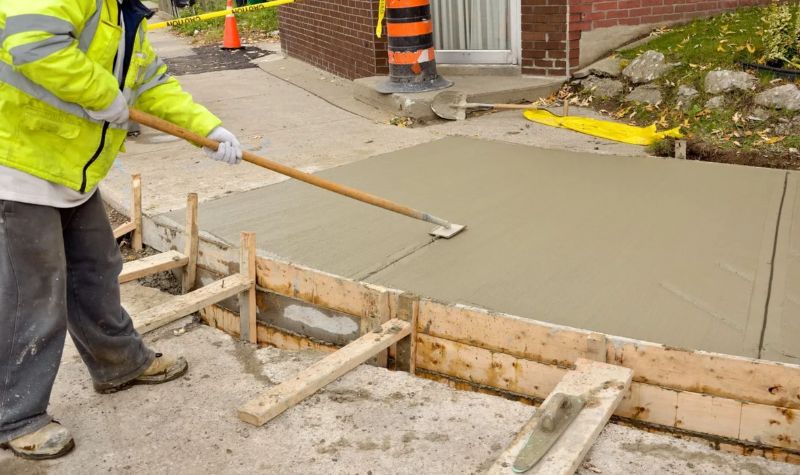
If you’re existing concrete slab has major damage, consider its replacement, which may cost you higher compared to its repair. It involves the removal and disposal of the existing slab, costing you from $2 to $12 per square foot. For example, removing and disposing of a 10×10 slab costs $200 to $1,200.
However, if your concrete slab has minor damage, consider its repair, which may cost you $2 to $7 per square foot. Concrete repair is faster and cheaper than replacement, as it just involves tasks like fixing minor cracks and flaking. You may also apply a stamped or decorative overlay, costing you an extra $5 to $20 per square foot. The extent of the damage determines whether repair or replacement is best.
How To Save On Concrete Slab Pouring?
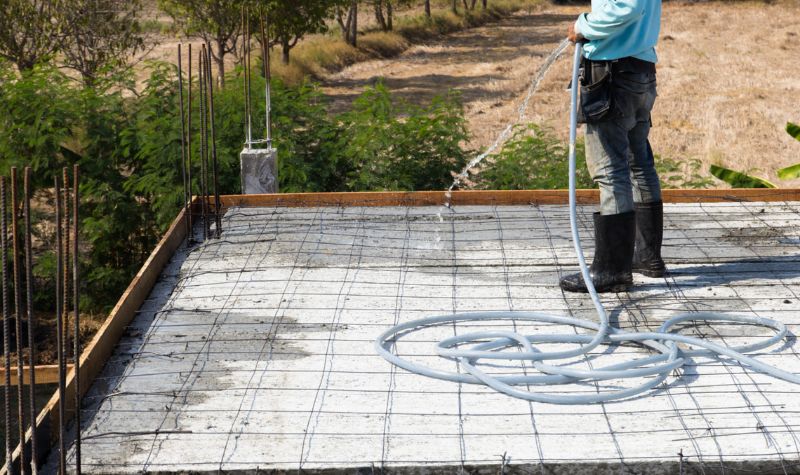
To save money on a poured concrete slab, consider choosing the tips below.
- Avoid unnecessary concrete thickness.
- Get multiple quotes from different contractors to get the best package.
- Consider pouring concrete slab in the offseason.
- Look for getting discounts and try to give a bulk order if required to avoid extra charges.
- Use bagged concrete and rent a mixer for small jobs.
- Try to schedule it with other house renovations to save time and money.
- Opt for on-site mixing for larger projects.
- Consider DIY prep work like forming, grading, and area leveling.
- Focus on proper site preparation and choose a gravel base for higher durability.
- For large or complex slabs, consider hiring a pro, and communicate budget and expectations.
- Try to prevent costly repairs with proper prep and pouring.
DIY Pouring Concrete Slab
Consider pouring concrete slab yourself if you’re an experienced DIYer. However, it’s time-consuming and physically demanding, but it may save you a lot. However, if you’re not a handy DIYer, consider hiring professionals to ensure a successful and stress-free project.
Step By Step Method To Install Concrete Slab
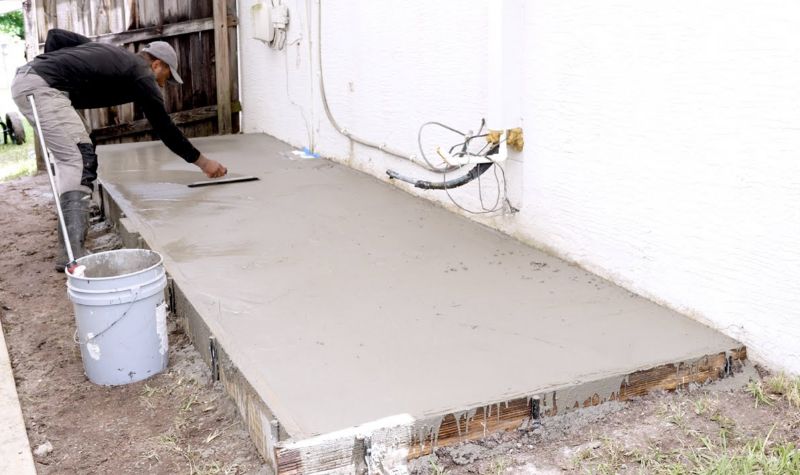
DIY pouring concrete slab involves several steps. First, clear the land, remove the debris, and compact the subgrade. Next, apply a gravel subbase and pack it down tightly. Now, mark the area, install a wooden perimeter, and add wire mesh or rebar for reinforcement.
After mixing and pouring the concrete, use tools like a bull float and a screeding tool to level and smooth the surface. Now, shape the sides, create joints to prevent cracking, and apply a broom finish for traction. Lastly, apply a concrete sealer to help it set properly.
DIY vs Professional Concrete Slab Installation
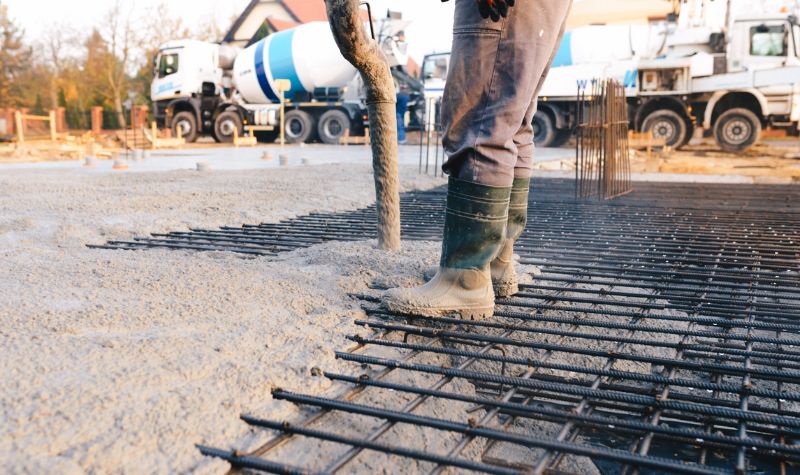
Pouring a concrete slab can be a complex task. If you’re a handy DIYer, you can get the desired results and save on installation costs. However, if you are not an experienced one, you might result in time consumption, wastage of money, and materials.
Hiring a professional is always recommended, especially for larger concrete slab pouring. It will not only give you your desired results and output, but also minimize mistakes and finish the work nicely in time. They can handle the physically demanding work efficiently and have all the necessary equipment and experience to get the job done swiftly.
Summary
Concrete slabs can be used for various projects like landscaping, patios, garage floors, driveways, and foundations. However, the cost of pouring concrete slab ranges between $3 to $14 per square foot, depending on factors like thickness, size, finish, and strength.
Frequently Asked Questions (FAQs)
What Is A Concrete Slab?
A concrete slab is a flat, strong surface made of concrete that supports buildings, patios, driveways, and garage floors. It provides a solid base for structures and outdoor areas.
How Do I Maintain My Concrete Slab?
To keep your concrete slab in good shape, clean it regularly, especially removing stains and dirt right away. Apply a sealant every few years to prevent cracks. Don’t overload it with heavy weights, and keep plants from growing into it. If cracks appear, get a professional to fix them quickly.
How Long Does A Concrete Slab Last?
A properly installed and well-maintained concrete slab can last anywhere from 50 to 100 years or more, depending on factors like construction methods, material quality, and environmental conditions.
When Should I Replace A Concrete Slab?
Consider replacing a concrete slab if you notice significant issues like uneven surfaces, poor drainage, large cracks, or damage that’s too extensive to repair. Additionally, if repair costs exceed replacement costs, the base is compromised, or the slab is 40+ years old with significant deterioration, it’s likely time for a new slab.
How Long Does A Concrete Slab Take To Dry?
A concrete slab takes about 1 to 2 days to dry for walking or pets, 1 to 2 weeks for driving, and 1 to 2 months to fully harden and become super strong. It’s best to wait 28 days for it to reach its full strength.