
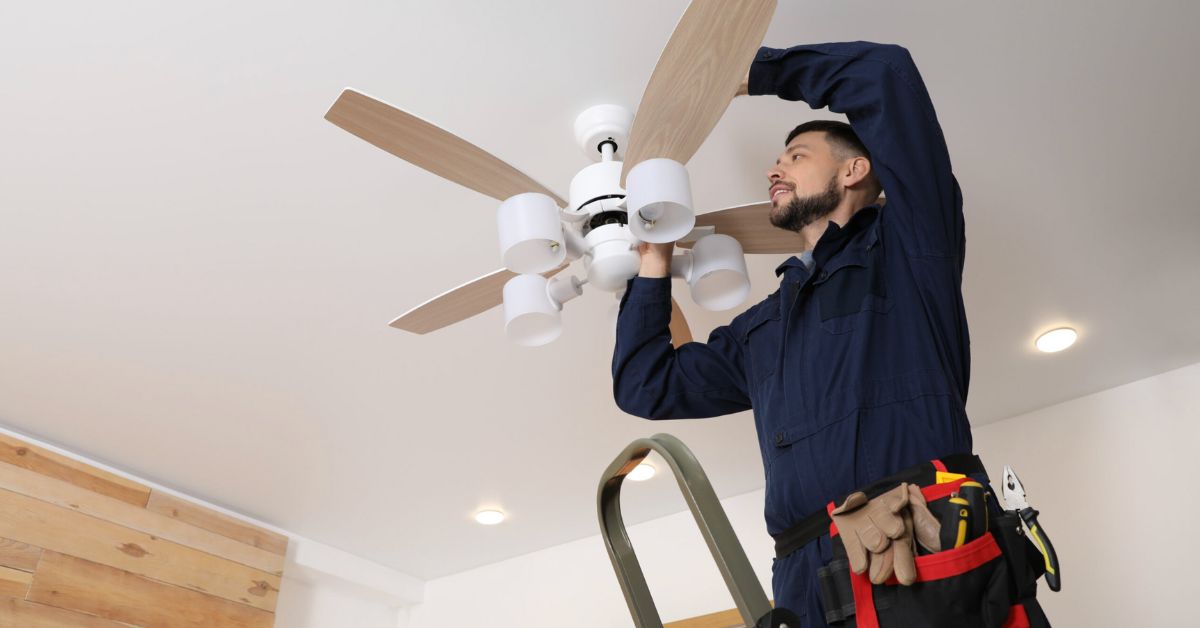
The Cost To Install Ceiling Fan ranges between $100 and $650 or more, depending on some key factors like fan type, blade size, labor, and project complexity. Let’s explore how these key elements influence ceiling fan installation costs and discover some budget-friendly tips for it. We’ll also share a fan calculator with you to get an accurate estimate for ceiling fan installation costs.
Cost To Install Ceiling Fan In 2025
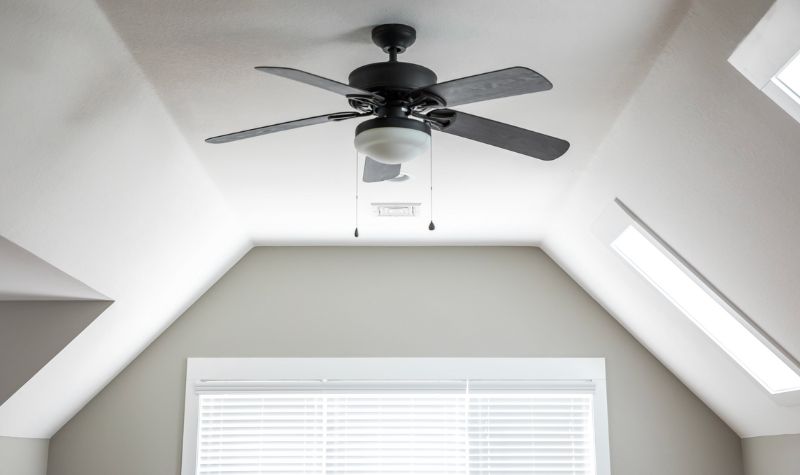
Installing ceiling fan offers numerous benefits, including enhanced comfort by circulating air and cooling, energy savings, and a stylish focal point in your space. You can also try installing one during bathroom renovations or other stuffy areas to provide immediate relief from heat.
Installing a new fan costs between $50 and $300, while replacing it costs between $100 and $550. The national cost for ceiling fan installation ranges between $250 and $550. However, it greatly depends on your chosen brand and fan size. Hiring a professional may cost an extra $30 to $50 per hour, depending on your location and the project’s complexity.
Ceiling Fan Installation Cost Calculator
Below is our free ceiling fan installation cost calculator to accurately measure prices for different fan sizes and types. Simply select your ceiling fan material and labor costs, and find out an estimated price for installing ceiling fan using this fan calculator.
Material Costs
Labor Costs
Additional Features
Total Estimate
1. Cost To Install Ceiling Fan By Size
Your chosen size impacts a lot on your ceiling fan installation charges. For example, a small fan size with 32″ to 36″ may cost you $50 to $300 and is perfect for small bedrooms and home offices. On the other hand, a fan size with 62″ to 72″ may cost you $600 to $2,500, and is perfect for outdoor patios and commercial spaces.
| Size | Price Range | Best For | What's Included |
|---|---|---|---|
| 32"-36" | $50 - $300 | Small bedrooms, home offices | Basic airflow, pull-chain control |
| 42"-44" | $120 - $500 | Medium bedrooms, living rooms | Remote control, optional light kit |
| 52"-54" | $200 - $800 | Master bedrooms, dining rooms | DC motor, dimmable LED light |
| 56"-60" | $350 - $1,200 | Great rooms, large living spaces | Smart controls, high CFM airflow |
| 62"-72" | $600 - $2,500 | Outdoor patios, commercial spaces | All-weather construction, industrial motors |
2. Cost To Install Ceiling Fan By Type
Several types of ceiling fan are available to choose from, ranging between $800 and $3,500. Each type has its own style, size, and features.
| Fan Type | Price Range | Best Use Cases |
|---|---|---|
| Standard | $50 - $350 | Bedrooms, living rooms (basic residential) |
| Low-Profile | $80 - $400 | Rooms with ceilings <8 ft (flush mount) |
| Damp-Rated | $150 - $600 | Covered patios, screened porches |
| Wet-Rated | $180 - $850 | Pool areas, exposed outdoor spaces |
| Energy Star Certified | $120 - $700 | Energy-conscious homes (utility rebates) |
| Smart Fan | $200 - $1,200 | Smart homes (WiFi/voice control) |
| Directional | $250 - $900 | Spaces needing targeted airflow |
| Dual-Motor/Rotational | $400 - $1,800 | Modern decor, high-airflow needs |
| Hanging Propeller | $800 - $3,500 | Commercial/industrial spaces |
Factors Impacting Ceiling Fan Installation Cost
Apart from your chosen ceiling fan size and type, many other factors like brand, existing wiring conditions, preferred style, and more decide the overall cost to install a ceiling fan.
| Factor | Average Cost Impact | Important Notes |
|---|---|---|
| Fan Size | +$50 to +$200 | Larger fans cost more but move more air |
| Fan Type | +$75 to +$400 | Smart/outdoor fans cost significantly more |
| Installation Height | +$50 to +$200 | High/vaulted ceilings require special equipment |
| Wiring Condition | +$200 to +$500 | Old homes often need electrical upgrades |
| Switch Type | +$50 to +$200 | Wall controls cost more than pull chains |
| Labor Type | $75-$150/hr | Licensed electricians charge premium rates |
| Mounting System | +$20 to +$100 | Downrods/sloped adapters add cost |
| Regional Pricing | ±15-30% | Coastal cities typically cost more |
| Additional Features | +$30 to +$300 | Lights, remotes, and smart features add up |
1. Installation Height
Ceiling fan installation costs can increase for non-standard ceilings. For example, a standard ceiling height of 8 to 9 feet may cost you around $100 to $250, while commercial fans having above 20 feet may cost $800 to $2,500.
| Installation Height | Cost Range | Special Requirements |
|---|---|---|
| Standard (8-9 ft) | $100 - $250 | Basic installation, no extra equipment |
| Low Ceiling (<8 ft) | $120 - $300 | Flush mount kit required |
| High (10-12 ft) | $150 - $400 | Extended downrod (12-24") |
| Very High (13-20 ft) | $300 - $800 | Scaffolding/ladder assist, extra-long downrod |
| Cathedral/Vaulted | $250 - $600 | Angled mounting kit |
| Commercial (20+ ft) | $800 - $2,500 | Industrial lifts, structural reinforcement |
2. Wiring Condition
It’s important to pre-wire your ceiling if it isn’t already before installing a ceiling fan. You may hire a professional to repair or rewire your house, which may cost you a fix $200 to over $500, or hourly rates of $50 to $100.
3. Switch Type
You’ll also have to install a switch, which may cost you an additional $50 to over $200, depending on your chosen quality and style.
4. Labor
Labor charges can impact the cost to install ceiling fan. Labor rates range between $75 and $150 per hour if you hire a licensed professional. Some contractors may also charge you $25 to $50 per hour, if it doens’t require extra wiring work. Moreover, labor rates can vary by location. Rural areas often have lower rates compared to urban areas.
5. Mounting System
You’ll need a mounting kit to hang your ceiling fan, costing you from $20 to over $100.
6. Regional Pricing
Material and labor charges can vary almost 15 to 30% based on your location. Mostly coastal cities typically have higher costs compared to an inland city.
7. Additional Features
There are many additional features like remotes, lights, sensors, and voice controls which can be chosen if you prefer. So, make sure to consider these items too when looking for what is the cost to install ceiling fan.
| Additional Feature | Installation Cost Range | Notes |
|---|---|---|
| Integrated Lighting Kit | $50 - $200 | Includes wiring and bulb installation |
| Basic Remote Control | $30 - $100 | Simple RF remote setup |
| Wall Control Panel | $75 - $250 | Requires wiring to wall switch |
| WiFi Smart Control | $100 - $300 | App setup and network configuration |
| Voice Control (Alexa/Google) | $120 - $350 | Includes smart hub integration |
| Dimmer Switch | $60 - $180 | For both fan and light control |
| Matter/Thread Support | $150 - $400 | Future-proof smart home compatibility |
| Ceiling Mounted Sensor | $80 - $220 | Motion/occupancy detection |
| Dual Switch Wiring | $150 - $400 | Separate light/fan wall controls |
Step By Step Method To Install Ceiling Fan
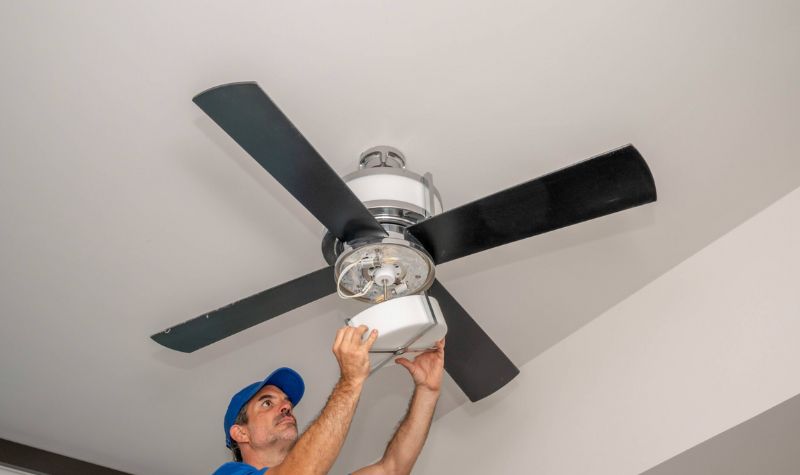
If you’re an experienced DIYer, consider installing ceiling fan yourself by following the step-by-step methods below. However, make sure to gather some essential tools like a wire stripper, a ladder, a voltage tester, and a screwdriver.
- Turn off the power to your space at the circuit breaker or fuse box.
- Remove the old fan or fixture if it’s not needed, and take note of the wiring connections
- Follow the user manual from your ceiling fan company to put it together.
- If necessary, install a new electrical box and bracket, ensuring it’s securely fastened to the ceiling joist.
- Connect the wiring from your ceiling to the fan according to the fan’s instructions and local electrical codes.
- Now, hang the fan from the ceiling, making sure it’s level and secure.
- Finally, turn the power back on by switching on the circuit breaker and test the fan to ensure it’s working properly.
However, if you aren’t a handy DIYer, consider hiring a professional electrician for a safe and proper fan installation.
DIY vs Professional Ceiling Fan Installation
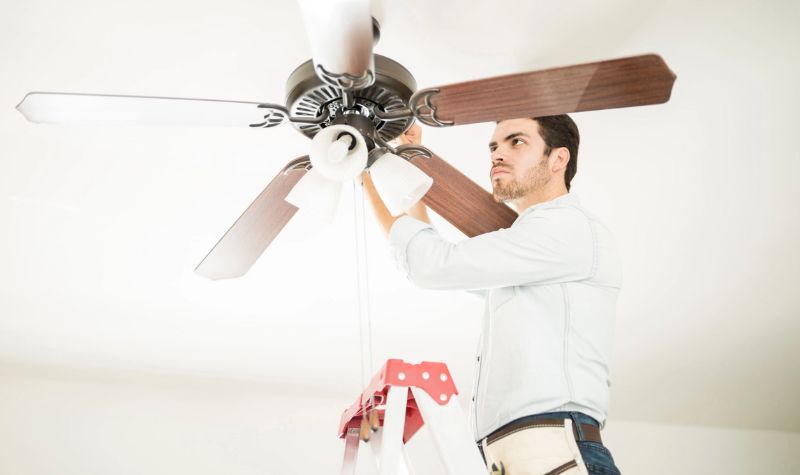
Hiring a professional is always recommended to ensure a safe and proper installation for any project. However, experienced DIYers can also get the job done, but to some extent.
DIY Ceiling Fan Installation
DIY ceiling fan installation will be easy for you if you have experience with electrical work and the right tools. It is a cost-effective option that eliminates labor costs and provides a learning opportunity to gain new skills and understand home electrical systems.
However, without proper tools and expertise, working with live wires and installing heavy overhead equipment poses significant safety risks or property damage, such as unstable mounting, electrical hazards, or ceiling damage. Improper ceiling fan installation might even harm someone below. This will make the process time and money-consuming. So, if you’re unsure about your skills, wiring, or any part of the process, it’s best to hire a professional electrician to ensure a safe and proper installation.
Professional Ceiling Fan Installation
If you’re unaware of home wiring and electrical systems, consider hiring a licensed electrician who guarantees a safe and correct installation, especially for complex installations, homes without an existing ceiling fan mount, or new wiring during any home renovation.
They have all the necessary tools and safety equipment to ensure proper wiring, secure mounting, and follow local electrical codes for a safe and correct ceiling fan installation. Hiring a professional electrician will give you peace of mind and minimize potential risks, but it will increase the overall cost.
Bottom Line
When planning a ceiling fan installation, make sure to consider the key factors like fan size, type, wiring conditions, switch type, and other additional features, which are mentioned above. Experienced buyers and those who are well aware of their home electrical and wiring systems may save the labor costs. However, hiring professional electricians is always mandatory, especially for complex wiring and home fixing projects.
Frequently Asked Questions (FAQs)
How Long Does It Take To Install A Ceiling Fan?
Ceiling fan installation time varies between 1 and 2 hours for basic setups, depending on factors like ceiling support and existing wiring. However, complex installations which involve high ceilings or new wiring can even take longer.
Do I Need A Permit To Install A Ceiling Fan?
Most ceiling fan installations typically don’t require permits. However, if extensive wiring or upgrading the electrical box is required, you’ll have to get a permit for that.
How Can I Maintain My Ceiling Fan?
Regularly clean the blades and motor, check for loose screws, lubricate the motor if needed, and ensure the fan is balanced to prevent shaking, if you want to keep your ceiling fan running smoothly.
How Long Do Ceiling Fans Last?
A ceiling fan usually lasts 10 to 15 years, depending on usage, quality, and maintenance.
How High Should A Ceiling Fan Be Off The Ground?
A ceiling fan should be installed at least 8 to 10 feet above the floor for best airflow, performance, and safety. However, a downrod can be used for high ceilings.